Thinking about buying your first home near Charlotte without giving up convenience or value? Pineville could be the sweet spot. You get a short drive to Uptown, everyday shopping close by, and a range of home types that fit many first-time budgets. In this guide, you will learn how the Pineville market works, what your monthly payment could look like, how North Carolina contracts differ, and the exact steps to get from pre-approval to keys in hand. Let’s dive in.
Why Pineville works for first-time buyers
You want access to Charlotte with a calmer, suburban feel. Pineville delivers. The town notes it is about a 20-minute drive to Uptown in off-peak conditions, depending on your route and traffic. You can confirm that general proximity on the town’s About Pineville page.
Commutes here are manageable by regional standards. Census data shows Pineville’s mean travel time to work is in the mid-20-minute range, which aligns with the town’s location near major corridors. You can explore this context using the U.S. Census QuickFacts.
You will also find practical amenities. The Carolina Place area anchors many services, and CATS runs bus routes that serve the mall and corridor, giving you a transit option if you do not want to drive every day. See the latest service notes on the CATS Better Bus update.
Snapshot: prices and pace
As of late 2025 into early 2026, recent market snapshots from major data vendors show typical Pineville home values in a rough range of about $397,000 to $462,000. Different sources measure different things, so treat this as a quick orientation and always verify current MLS data before you write an offer. The market has been moderately competitive in recent months, so plan your offer strategy with live, address-level comps.
If you are weighing renting versus buying, recent snapshots have also shown median rents around $1,600 to $1,650 per month. Use those figures as context when you map out your budget and stability goals for the next few years.
What you can buy in Pineville
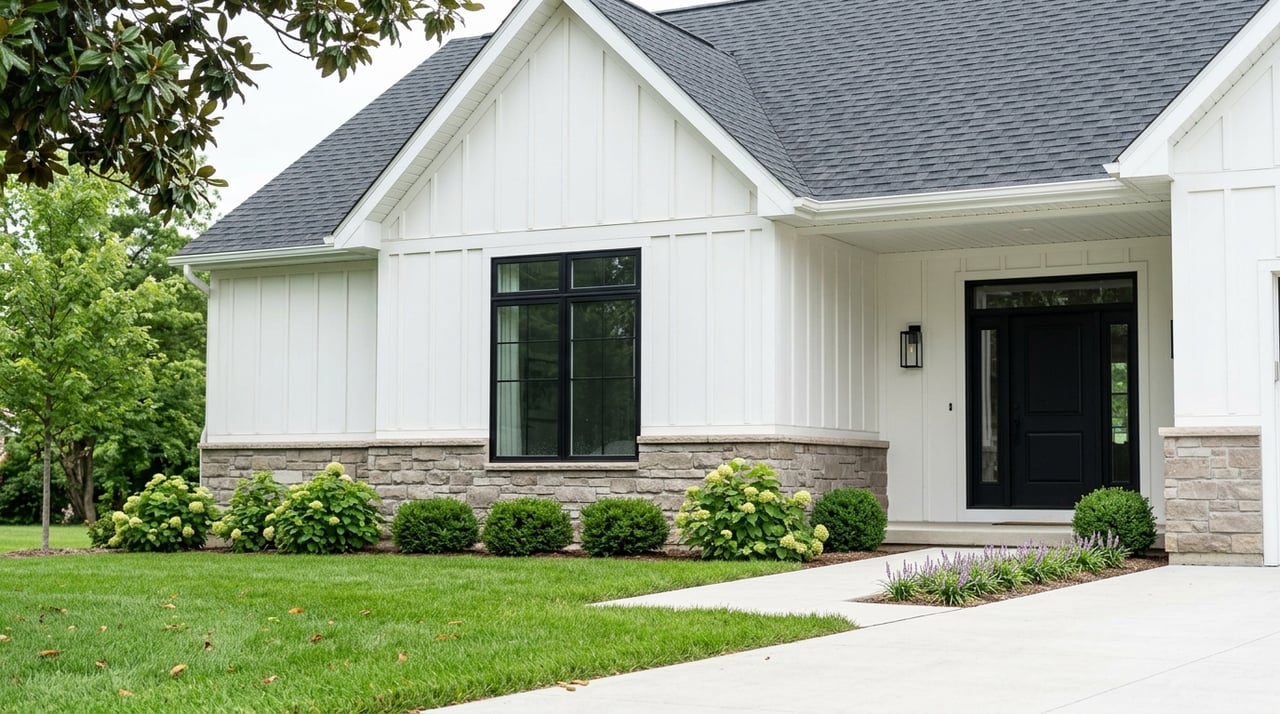
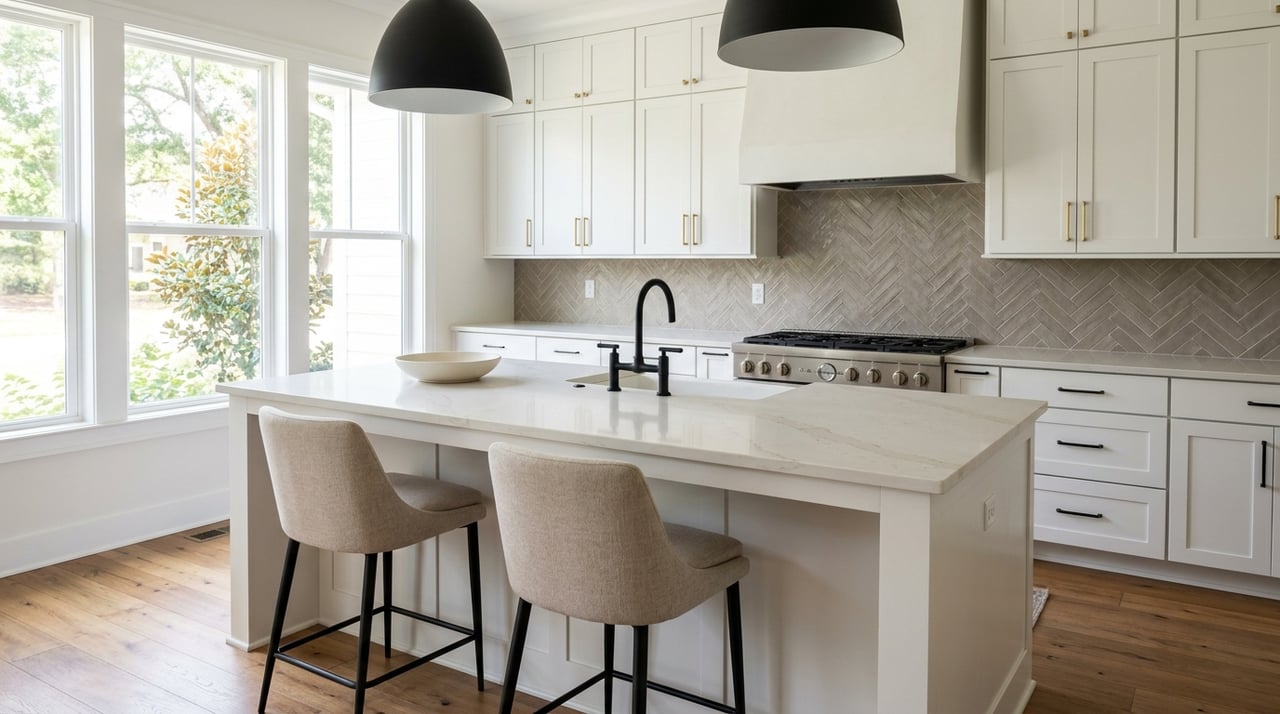
You will see a mix of older single-family ranch and colonial homes in established sections, newer single-family subdivisions and infill, and several townhome or condo pockets near shopping corridors. Newer communities, including recent builds by energy-focused builders, often command a premium for efficient systems and modern layouts. Features that add value in Pineville include updated kitchens, energy efficiency, finished bonus spaces, and homes close to parks or retail.
Here is a quick way to picture options by example budget. These are examples only, not listed prices. Always check current inventory.
| Example price band | Typical home type you may see | Off-peak drive to Uptown |
|---|---|---|
| Around $400,000 | Older single-family or a newer, smaller townhome/condo | About 20-25 minutes |
| Around $425,000 | Newer 3-bed single-family in a subdivision, energy-efficient features | About 20-25 minutes |
| Around $475,000+ | Larger or newly updated single-family, possible premium location/features | About 20-25 minutes |
Source for drive time context: Town of Pineville.
Your Pineville buying roadmap
Buying your first home is a series of clear steps. Here is what the path looks like in Pineville and across North Carolina.
1) Build your monthly budget
Start with a target purchase price and translate it into a monthly number that includes principal and interest, property taxes, homeowners insurance, HOA dues if applicable, and utilities. Property taxes are a key local line item. For FY2026, Mecklenburg County lists a county rate of 49.27 cents per $100 of assessed value on its official tax rates page. The Town of Pineville lists a municipal rate of $0.285 per $100 of value on the town finance page, which also explains that Mecklenburg County bills and collects town taxes. You can confirm both points on the Town of Pineville Finance page.
Use the tax math example in the section below to estimate your monthly total quickly.
2) Get pre-approved with a local lender
Pre-approval verifies your buying power and strengthens your offer. If you want down payment assistance, look for lenders who participate in the North Carolina Housing Finance Agency’s programs. The NCHFA’s NC Home Advantage Mortgage and the NC 1st Home Advantage Down Payment program can help eligible buyers with competitive financing and, in some cases, up to $15,000 in down payment assistance. Review eligibility and participating lenders on the NCHFA homebuyer page.
3) Understand NC contracts, the due-diligence period, and fees
North Carolina commonly uses the standard Offer to Purchase and Contract that includes a negotiated Due Diligence Period and a Due Diligence Fee paid to the seller. The fee is usually nonrefundable unless the seller breaches. This structure shapes your offer strategy and timelines. The North Carolina Real Estate Commission explains how the due-diligence fee and period work in its Due Diligence Q&A. Read that guidance before you write your first offer.
In more competitive situations, buyers sometimes offer a larger due-diligence fee and a shorter due-diligence period to stand out. This is negotiable and carries risk if you decide to terminate outside the period. Size your fee to the local market and your comfort level.
4) Shape your offer strategy
Decide on your offer price, due-diligence period length, due-diligence fee amount, and earnest money deposit. In a moderately competitive environment, clear, well-structured offers tend to get attention. Your exact numbers should reflect current days on market, sale-to-list trends, and the specific property’s condition and location. Have your pre-approval and proof of funds ready so the seller can move forward quickly.
5) Schedule inspections and manage appraisal
During the due-diligence period, order a general home inspection. Add specialists as needed, such as pest, HVAC, roof, or sewer/septic where applicable. If major issues appear, you can negotiate repairs or credits, or you may choose to terminate within the due-diligence window. The NCREC Q&A clarifies the difference between the due-diligence fee and earnest money. In short, the due-diligence fee is usually nonrefundable, and earnest money is typically refundable if you terminate during the due-diligence period. Review the NCREC Due Diligence Q&A to understand your rights and obligations.
6) Plan for closing with a North Carolina attorney
In North Carolina, a closing attorney coordinates title work, prepares documents, and records the deed. Budget for closing costs equal to about 2 to 5 percent of the purchase price, plus prepaid items like taxes and insurance. Your lender’s Loan Estimate will outline your expected cash to close. If you use NCHFA financing, you will find more details on the NCHFA homebuyer page.
7) After closing: set up life in Pineville
Line up utilities, trash service, HOA move-in procedures if applicable, and any permits if you plan to renovate. The Town of Pineville finance page explains tax timing and that the county handles billing, which helps you plan your first year’s payments. Keep this resource handy: Town of Pineville Finance.
Quick first-time buyer checklist
- Get pre-approved and request a sample Loan Estimate.
- Check NCHFA eligibility and participating lenders.
- Set your offer strategy, including due-diligence fee, period, and earnest money.
- Plan inspections early in the due-diligence period.
- Select a closing attorney and confirm closing costs.
- Review HOA documents and rules where applicable.
- Confirm commute and transit options that fit your routine.
Commute and daily life
- Driving: Off-peak, Pineville is about a 20-minute run to Uptown Charlotte, depending on route and traffic. See the town’s About Pineville page for general orientation.
- Transit: CATS serves the Carolina Place area with bus routes, which can work for certain schedules. Check updates and route changes on the CATS Better Bus update.
- Long-term transit proposals: Regional plans have discussed a potential Lynx Blue Line extension toward Pineville. Timing depends on funding and approvals, so treat it as a proposal, not a promise. You can track context via this WFAE overview of Charlotte’s rail plan discussion.
- Everyday destinations: You are near retail, services, and entertainment like Carowinds, as well as South Charlotte employment centers. Charlotte Douglas International Airport and Ballantyne are a short drive, with timing based on your route and traffic.
Schools and attendance boundaries
Pineville is served by Charlotte-Mecklenburg Schools. Attendance boundaries can change, and assignments vary by address. Before you make an offer, confirm the current attendance zone using CMS tools or by contacting the district. Start at the Charlotte-Mecklenburg Schools website.
Budget example: property tax math you can copy
Use this combined rate example to estimate property taxes for Pineville. Date of example: FY2026.
- County rate: 0.4927 per $100 of value. Source: Mecklenburg County Tax Rates.
- Town rate: 0.285 per $100 of value. Source: Town of Pineville Finance.
- Combined rate: 0.4927 + 0.285 = 0.7777 per $100 of value.
Example calculations:
- $400,000 home: (400,000 ÷ 100) × 0.7777 ≈ $3,110.80 per year, about $259 per month.
- $425,000 home: (425,000 ÷ 100) × 0.7777 ≈ $3,305.23 per year, about $275 per month.
Tip: Add homeowners insurance, HOA dues if applicable, and utilities to build a complete monthly budget.
What to watch during inspections
- Older homes: Pay attention to roofs, HVAC age, foundation and crawlspace moisture, and electrical panels. These items can affect both safety and long-term costs.
- Newer construction: You may see energy-efficient features that lower operating costs. Even with new builds, third-party inspections can catch punch-list items.
- HOA communities: Review covenants, rules, recent budgets, and reserve studies. Make sure you are comfortable with fees, policies, and upcoming projects.
Ready to start with a local plan?
If Pineville feels like the right first home base, you deserve a calm, well-run buying process. You will get clear steps, smart offer strategy, and hands-on coordination from search to close. Connect with Aralena Paulette to map your budget, tour the right homes, and write a confident offer.
FAQs
How much money do I need to close on a Pineville home?
- Plan on your down payment plus closing costs of about 2 to 5 percent of the purchase price, along with prepaid items; if you qualify, NCHFA programs can reduce your total out-of-pocket. See the NCHFA homebuyer page for details.
In North Carolina, what is the due-diligence fee on a home purchase?
- It is a negotiated fee paid to the seller for the due-diligence period and is usually nonrefundable unless the seller breaches; learn the mechanics in the NCREC Due Diligence Q&A.
Do first-time buyers in Pineville qualify for assistance programs?
- Many do; review statewide options with the NCHFA and, if you consider nearby Charlotte addresses, the City’s House Charlotte program; start with NCHFA resources and the House Charlotte page.
Who handles the closing in North Carolina home purchases?
- A North Carolina closing attorney manages title work, prepares settlement documents, and records the deed; your lender and attorney will outline exact fees and timelines, and the NCHFA homebuyer page offers general guidance.
How long is the commute from Pineville to Uptown Charlotte?
- Off-peak driving is often about 20 minutes, with a mean commute time in the mid-20-minute range by Census measures; bus routes also serve the Carolina Place area via CATS, though trips may take longer than driving.