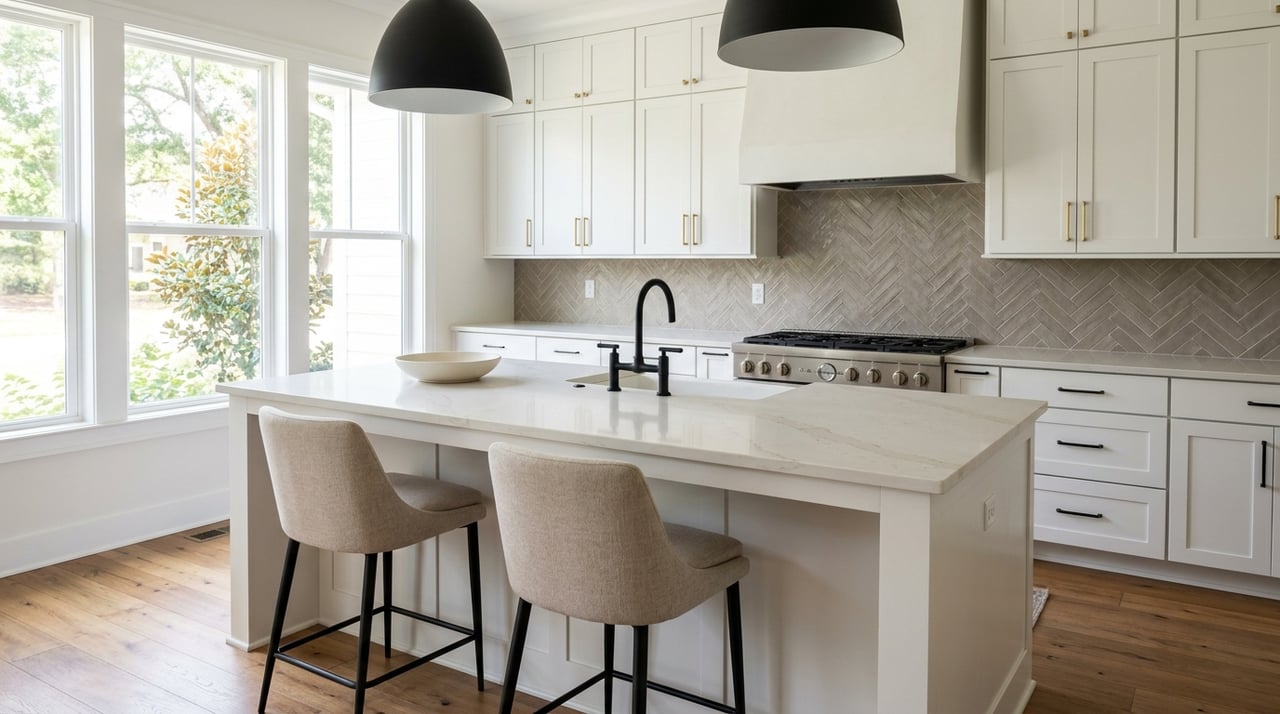
If you have started touring model homes in The River District, you have probably noticed one thing fast: this is not a one-size-fits-all new construction community. You are not just choosing a neighborhood. You are choosing between builders, product types, phases, price points, and contract terms that can shape your monthly budget and day-to-day life. This guide will help you compare builder options in River District with more clarity, so you can focus on the home that truly fits your goals. Let’s dive in.
Why River District comparisons matter
The River District in west Charlotte is a master-planned community near the Catawba River and Charlotte Douglas International Airport. Official materials describe it as a mixed-use community with thousands of planned residential units, open space, trails, and a walkable live-work-play layout. Some sources describe the community as about 1,200 acres while others still use 1,400 acres, so it is best to treat the acreage as a detail that may vary by source.
What matters most for you as a buyer is that the community is active now, not just planned on paper. Crescent Communities announced the opening in September 2025, the first resident moved into a David Weekley home in Westrow, and the first phase includes more than 260 lots. That means you are comparing real inventory, current releases, and active builder choices inside a growing community.
Start with home type first
The most important comparison is not the prettiest model home. It is whether the builder’s product type fits how you want to live.
Some buyers want the lower-maintenance feel of a townhome. Others want a detached home with more separation, a different lot setup, or added flexibility for guests, storage, or future needs. In The River District, builders are offering very different experiences, even within the same master plan.
DRB Homes offers the widest range
DRB Homes is currently the only builder in The River District offering both townhomes and single-family homes. Public listings show the Landon townhome plan at about 1,897 square feet from the mid-$400s, while detached homes start around $574,900 and range roughly from 2,210 to 3,045 square feet with 3 to 4 bedrooms.
If you are deciding between attached and detached living but want to stay in the same community, DRB gives you the broadest ladder of options. That can be especially helpful if you want to compare lifestyle tradeoffs without changing locations.
David Weekley spans two single-family tiers
David Weekley Homes offers two collections at different size and price points. The Pioneer Collection is in final-opportunity mode and runs about 1,916 to 2,491 square feet starting from $556,990. The Excursion Collection offers larger plans on 52-foot homesites at about 2,300 to 3,400 square feet starting around $700,990.
This setup can work well if you know you want a detached home but are still deciding how much space you really need. It also gives you a cleaner way to compare a more moderate single-family option against a larger move-up product.
Toll Brothers leans into luxury townhomes
Toll Brothers is currently the luxury townhome choice in The River District. Its community pages describe River Point as coming soon from the upper $400,000s, while the Westrow Collection is move-in ready from roughly $514,000 to $647,000 at about 2,180 to 2,224 square feet.
Toll’s offering stands out for three-story layouts, 4-bedroom plans, rooftop terraces, lofts, first-floor bedrooms, and curated design packages. If you want a more vertical, amenity-forward townhome style, this is one of the clearest distinctions in the community.
Saussy Burbank focuses on larger detached homes
Saussy Burbank currently anchors the larger detached-home side of the market in The River District. Public materials show homes starting in the high $700s and ranging from about 2,800 to 4,400 square feet, including basement options. Listing examples such as Rhodes at $783,900 and Tanner at $879,900 show how quickly pricing can move into the upper $700s and $800s.
If your priority is a larger floor plan, more overall square footage, or added flexibility from basement and lot-type options, Saussy Burbank may land at the top of your comparison list.
Compare floor plans for daily life
Square footage can be useful, but it does not tell you how a home actually lives. Two homes with similar size can feel completely different depending on layout, number of levels, bedroom placement, garage setup, and how flexible the bonus spaces are.
As you compare builders, focus on the details that affect your routine:
- Primary suite location
- Number of stories
- Garage count
- Bedroom and bathroom count
- Space for guests or remote work
- Flexibility for multigenerational living
- Outdoor living features like terraces or basement walk-out potential
A polished model can make almost any plan feel appealing for 20 minutes. Your job is to picture your real mornings, evenings, storage needs, and hosting style.
Don’t overlook the phase and homesite
In The River District, the homesite can matter just as much as the builder. Westrow is the first phase and town center, while Basswood is a later phase with its own trail connections and home releases.
That means two homes in the same overall community may offer different surroundings, release timing, and nearby features. Saussy Burbank also shows different lot types, including alley-fed and front-loading homes, plus some walk-out basement opportunities.
Verify the exact section
One common mistake is assuming every home in The River District is basically the same because it shares one community name. Builder pages show that section-specific details can differ. David Weekley’s public pages, for example, note that school assignments can vary between Basswood and Westrow.
Before you compare value, verify the exact homesite, phase, and address. That is the only way to compare apples to apples.
Look closely at design choices and upgrades
Builder pricing often starts with an attractive base number, but your final cost may depend heavily on selections and options. This is where buyers can lose clarity if they focus only on the advertised starting price.
Each builder signals a different design approach. Toll Brothers emphasizes curated Designer Appointed Collections and options like rooftop terraces, lofts, and first-floor bedrooms. DRB notes that buyers may choose designer-curated homes or personalize features. Saussy highlights architectural variety and lot-driven differences, while David Weekley notes that price and size can vary with bonus rooms and selected options.
Ask these upgrade questions
When comparing builders, ask:
- What is included in the base price?
- Which finishes shown in the model are upgrades?
- Are structural options still available for this homesite?
- When do design selections need to be finalized?
- Are there quick move-in homes with predetermined finishes?
These answers affect both cost and timing. They also help you avoid falling in love with a model home that does not reflect the true final price.
Compare the real monthly cost
List price is only part of the story. The better comparison is your full cost of ownership.
That includes HOA dues, estimated taxes, utility setup, incentives, lender terms, and any upgrade costs rolled into your purchase. At least one current David Weekley River District page publishes a monthly HOA figure of $197.92 and a combined city and county tax figure of 0.7572%, though those details should be verified for the exact homesite because they can vary by phase and address.
Build a side-by-side cost sheet
A simple comparison worksheet can help you stay grounded. Include:
- Base price
- Lot premium, if any
- Structural options
- Design upgrades
- Estimated HOA dues
- Estimated property taxes
- Incentives or credits
- Projected monthly payment
- Estimated completion or closing timeline
This view often changes which home feels like the best value. A lower starting price does not always mean a lower final cost.
Representation matters early in North Carolina
If you are buying new construction in Mecklenburg County, timing matters when it comes to representation. North Carolina Real Estate Commission guidance says the Working with Real Estate Agents brochure must be presented at first substantial contact. It also says a broker representing a buyer must have a written buyer agency agreement no later than the time an offer is made, and best practice is to sign before the offer is prepared.
In practical terms, that means you should decide how you want to be represented before serious builder conversations move too far. This is especially important if you are discussing price range, incentives, contract terms, or specific homesites in a fast-moving new construction setting.
Due diligence deserves attention
North Carolina’s due diligence structure also makes contract timing important. The NCREC explains that the due diligence fee is paid to the seller at contract execution and is usually nonrefundable. During the due diligence period, you may terminate for any reason or no reason, but once that period expires, earnest money can be at risk if you cannot close.
That matters in a community like The River District, where lot releases, quick move-in opportunities, design deadlines, and completion windows may all move quickly. Clear guidance can help you track those dates and understand the terms before you sign.
Which builder may fit your budget best?
Based on current public inventory, DRB townhomes appear to be the most affordable entry point in The River District. DRB detached homes and David Weekley Pioneer generally sit in the middle of the current lineup. Toll Brothers townhomes occupy an upper-middle townhome tier, while Saussy Burbank currently holds the highest detached-home price band.
That said, price is only one piece of the decision. A better question is which builder-product combination fits your lifestyle, target monthly payment, and move timeline.
A smart River District buying strategy
The best way to compare builders in The River District is to narrow your search in this order:
- Choose attached or detached living
- Set a realistic all-in monthly budget
- Compare phases and homesite locations
- Review floor plans for daily function
- Confirm what is included versus upgraded
- Understand timing, incentives, and contract terms
This approach helps you make a decision based on fit, not just presentation. In a growing master-planned community, that usually leads to a better long-term outcome.
If you want a clear side-by-side view of builder choices in River District, phase differences, and the true cost behind the model-home presentation, Aralena Paulette can help you compare options with more confidence and less stress.
FAQs
Which builder in The River District has the lowest entry price?
- Based on current public inventory, DRB Homes townhomes appear to be the lowest entry point, starting from the mid-$400s.
Which River District builder offers both townhomes and detached homes?
- DRB Homes is currently the only builder in The River District offering both townhomes and single-family homes.
Which River District builder is best for larger detached homes?
- Saussy Burbank currently offers the largest detached-home range, with homes from about 2,800 to 4,400 square feet and pricing starting in the high $700s.
Why does buyer representation matter when buying new construction in North Carolina?
- North Carolina requires early agency disclosure, and a written buyer agency agreement must be in place no later than the time an offer is made, with best practice being earlier.
What should you compare besides River District starting prices?
- You should compare home type, floor plan layout, homesite and phase, included features, upgrade costs, HOA dues, taxes, incentives, and closing timeline.
Do homes in every River District phase have the same details?
- No. Builder materials show that section-specific details can vary, including phase location, lot types, nearby features, and even school assignments by address.