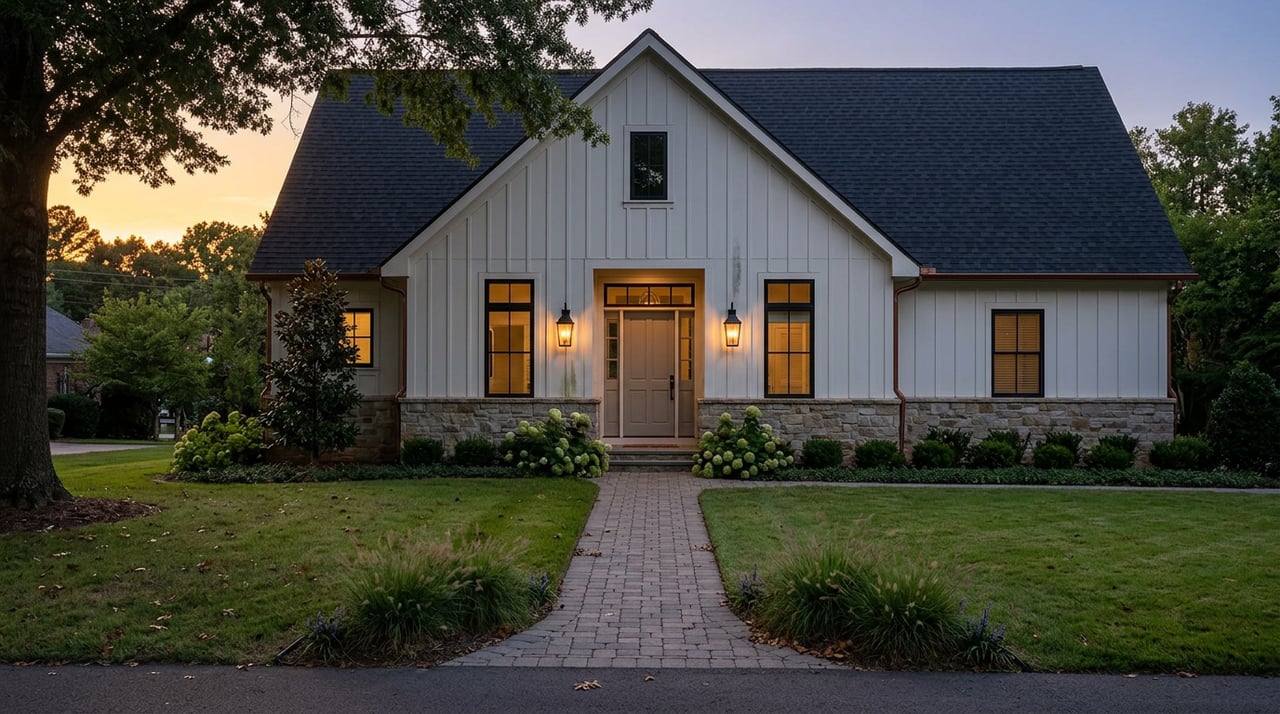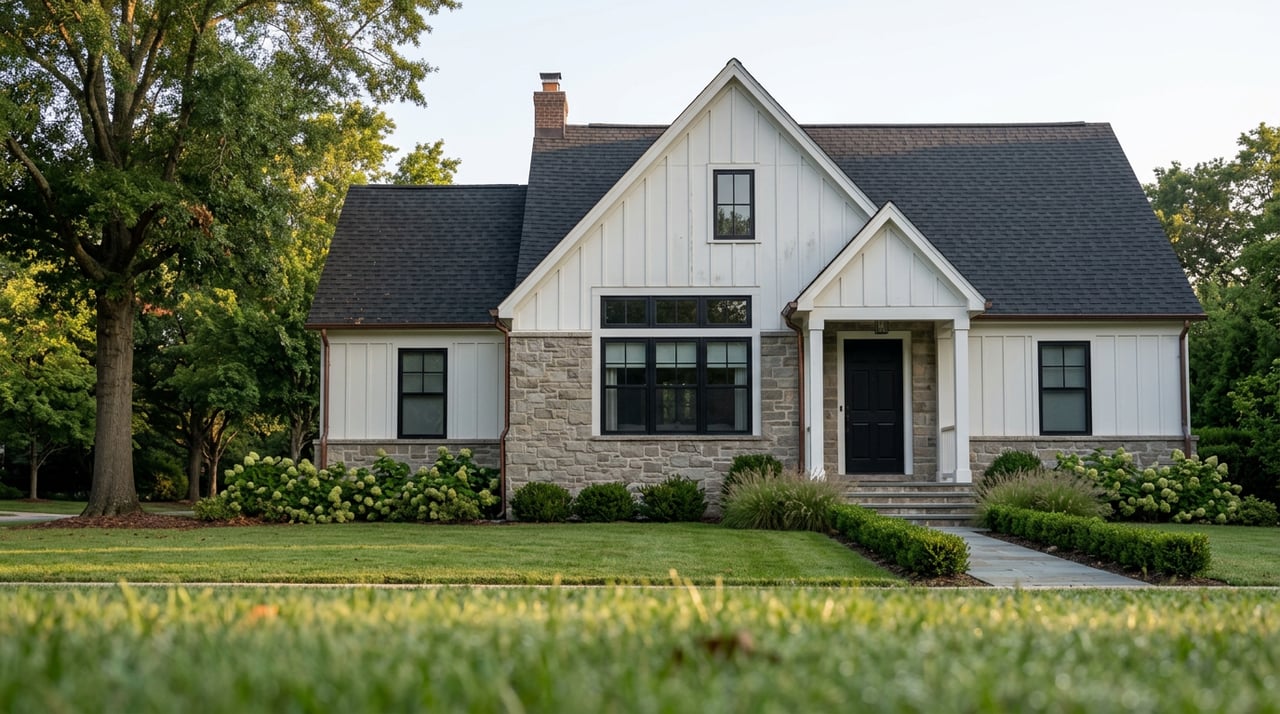
Search for SouthPark home prices and you get one number. That number is doing more work than it should. It can obscure the difference between a brick ranch on a half-acre lot in Beverly Woods and a two-bedroom unit in a tower near the mall corridor, two properties that do not compete for the same buyer, do not finance the same way, and do not sell on the same timeline for the same reasons.
Here is the actual gap. As of July 31, 2026, single-story homes in SouthPark carried a median listing price of $645,000. Just over two months earlier, on May 14, 2026, SouthPark condos listed at a median of $272,000. Zillow reported a typical home value of $679,522 for the area over roughly the same window, up 2.6% year over year. None of those three numbers describes a home you can actually walk through.
The gap is not noise. It is structural. The two segments run on separate economic engines, and knowing which one you are buying into matters more than the neighborhood name printed on the listing sheet.
The Single-Family Engine: No More Land to Build On
SouthPark's residential streets, Beverly Woods, Barclay Downs, Foxcroft, Sharon Woods, Stonehaven, Mountainbrook, were built out between the late 1950s and early 1980s on land that had been Governor Cameron Morrison's roughly 3,000-acre farm. Developer John Crosland built Beverly Woods' brick ranches on wooded lots during the 1960s and 70s. At the estate end of the market, Morrocroft Estates grew up around Morrocroft Manor, a 14,000-square-foot Tudor Revival house built between 1924 and 1927 and listed on the National Register of Historic Places.
Every one of those subdivisions is finished. There is no raw land left to carve into new lots. When a new single-family home appears in SouthPark today, it comes from someone buying an existing house, tearing it down, and rebuilding, not from a developer platting a new phase. That process is slow and expensive, which means a rising price cannot summon new inventory the way it would in a growing suburb where a builder still holds land in reserve. Demand climbs, and the supply side simply cannot answer quickly.
The demand side is unusually well capitalized for a residential market. The SouthPark employment corridor holds somewhere between 40,000 and 67,000 workers, and a meaningful share of them live in the surrounding neighborhoods rather than commute in. That combination, a fixed lot count and a nearby buyer pool with above-median income and above-median tolerance for price, is what holds the single-family median at $645,000 while the streets around it stay exactly as full as they were a decade ago.
The Condo Engine: A Building's Balance Sheet, Not the Neighborhood's Address
The condo segment does not answer to land scarcity at all. It answers to the financial condition of the specific building, and that condition rarely shows up on the listing itself.
HOA dues in SouthPark run a wide range, from little or nothing on older single-family streets with light or no association, up to $150 to $400 a month in newer condo and townhome buildings. But the monthly due is the easy number to find. The harder one is reserve funding, and it is the number that actually determines how liquid a unit is.
North Carolina does not require a condo association to run a reserve study or fund reserves at any specific level. That gap in state law was confirmed as recently as the Community Associations Institute's June 2026 Condominium Safety Public Policy Report, which found North Carolina has no statutory reserve requirement. A building can defer major repairs for years without violating any state rule.
According to AMG World, Fannie Mae and Freddie Mac are not bound by that same absence of a requirement. Both require a condo association to clear minimum reserve funding thresholds before a loan in that building can be sold on the secondary market, and that bar has been trending upward. Two buildings can look identical from the sidewalk. One clears the lending threshold without issue. The other does not, and a buyer relying on conventional financing may not be able to close there at all regardless of how much they are willing to pay.
That difference shows up in inventory, not just in financing paperwork. A single building that discloses a special assessment, or fails a lending review, can push a cluster of listings onto the market at once as owners try to exit before the cost lands, while single-family supply across the street stays completely flat because none of those triggers apply to a detached home. The two segments can move in opposite directions in the same quarter, and a blended neighborhood figure will never tell you why.
| SouthPark Single-Family | SouthPark Condo | |
|---|---|---|
| Median listing price | $645,000 (single-story homes, as of July 31, 2026) | $272,000 (as of May 14, 2026) |
| Typical days on market | 52 days | 56 days |
| What limits supply | No open land; new homes come from teardown-rebuild | Building-level reserve funding and lending eligibility |
| What anchors demand | Employment-dense local buyer pool | HOA financial health, not neighborhood location |
| Financing friction | Standard mortgage underwriting | Fannie Mae/Freddie Mac reserve-funding thresholds per building |
What This Means If You're Comparing Neighborhoods
If you are comparing SouthPark's price to Cotswold, Dilworth, or another intown enclave, specify the segment before you specify the neighborhood. A single-family comp and a condo comp from the same zip code are not measuring the same market, and treating them as substitutes will throw off any pricing conversation before it starts.
Before treating a condo listing as a real comparison point, ask for the association's reserve study status and recent meeting minutes, not just the monthly due. A low due with no reserve funding behind it is not a bargain. It is a deferred cost that has not been assigned to an owner yet.
For single-family homes, expect the inventory on the market today to be close to the inventory that will exist next year. There is no pipeline of new lots coming to compete with what is already built, which is part of why a buyer set on a large lot in Foxcroft or Beverly Woods has a narrow substitute set. A buyer who wants a low-maintenance unit near the mall corridor has a much deeper one, because that segment's supply responds to building-level events rather than land availability.
A median price answers a question nobody buying in SouthPark is actually asking, which is what the average home here costs. The question that matters is which of the two markets you're standing in.
Frequently Asked Questions
Why do SouthPark condos and single-family homes show such similar days-on-market numbers despite the price gap? Days on market measures how fast an active listing moves, not how much supply sits behind it. The single-family segment's 52-day figure reflects a market with almost no new listings to move through in the first place. The condo segment's 56 days reflects more units cycling through, with individual buildings competing on financial health and reputation as much as on location.
Is a reserve study legally required before I can buy a SouthPark condo? No. As confirmed in the CAI's June 2026 report, North Carolina does not require an association to conduct a reserve study or fund reserves at any set level. If that information matters to your financing or your long-term cost, request it directly from the HOA, since it will not appear on the MLS listing itself.
Whether you are weighing a rebuild lot in Beverly Woods against a unit near the mall corridor, the comparison only works once you know which engine you are evaluating. Aralena Paulette works both segments of the SouthPark market daily and can build the segment-specific comps that actually apply to your search. Schedule a Consultation to get started.
This article is general information, not legal, tax or financial advice. Consult a qualified professional about your situation.